Este artículo está disponible solo en inglés.
What Is AEO (Answer Engine Optimization)?
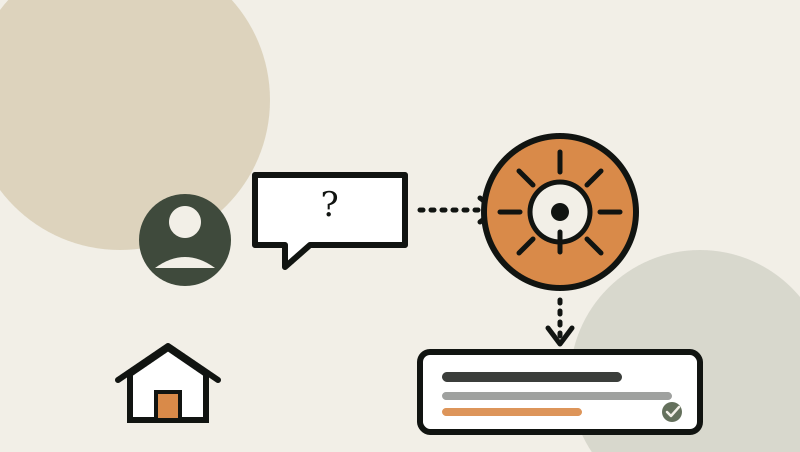
Answer Engine Optimization (AEO) is the practice of structuring your website's content so AI systems — ChatGPT, Google AI Overviews, Perplexity, Gemini — can extract it directly and present it as an answer, with or without a click to your site. Where traditional SEO competes for a ranking position in a list of links, AEO competes for something narrower and more valuable: being the actual sentence the AI reads back to the person asking the question.
How Is AEO Different From SEO?
SEO gets your page onto the results page. AEO gets your content quoted, summarized, or cited inside the answer itself — sometimes without the user ever visiting a search results page at all. The two disciplines overlap heavily (both reward clear, well-structured, technically sound content), but AEO adds requirements SEO alone doesn't: concise, self-contained answers near the top of a page, clean semantic HTML an AI can parse without executing JavaScript, and structured data (schema markup) that explicitly labels what your content is.
Why This Isn't Optional Anymore for Real Estate
The numbers on this shifted fast, and they're specific to home buyers, not just general web users:
- 45% of prospective homebuyers used AI tools during their home search in Q2 2026, up from 37% a year earlier, according to a Veterans United Home Loans survey. Buyers reported using AI most often to search for available homes, estimate payments, and check property values.
- 82% of home shoppers say they use AI for real estate insight, with ChatGPT (67%) and Gemini (54%) the most-used platforms, per a Realtor.com survey reported by National Mortgage Professional.
- ChatGPT alone has surpassed 700 million weekly active users, a scale Luxury Presence's CEO has described as making it the second-largest search engine after Google.
- 75% of buyers already assume AI is shaping their home search in some form, according to Cotality's 2026 AI in Housing report, even when they can't pinpoint exactly where it's involved.
The practical read: a meaningful and fast-growing share of the people who will eventually become your clients are asking an AI system questions about their target market — "What's it like to live in [neighborhood]," "Is now a good time to buy in [city]," "What should I know about buying land in [region]" — before they ever type a query into Google or land on an agent's website. If your content isn't structured for that AI to extract and cite, you're invisible for that entire stage of their decision, no matter how well your site ranks in traditional search.
What Actually Makes Content AEO-Friendly
There are five concrete things that separate content an AI engine can use from content it skips over:
1. Answer the question in the first sentence, not the fifth paragraph. AI systems pull the most direct, self-contained statement they can find. An article that opens with three paragraphs of scene-setting before getting to the point gets skipped in favor of a competitor's page that answers immediately.
2. Use real headers phrased as questions. "What Is Mérida's Average Property Tax Rate?" gets matched to a user's actual query far more reliably than a vague header like "Understanding Local Costs."
3. Your content has to actually be readable without JavaScript. This is the part most agent websites get wrong, and it's worth being blunt about: many AI crawlers fetch raw HTML and don't execute JavaScript at all. If your article text only appears after a client-side fetch call runs in the browser — a common pattern for sites that pull blog content from a headless CMS — the crawler sees an empty page and has nothing to cite, regardless of how good the writing is.
4. Add structured data (JSON-LD schema). Article, FAQPage, and LocalBusiness schema explicitly tell an AI system what a piece of content is, who wrote it, and when it was published — reducing the guesswork the AI otherwise has to do by parsing plain text.
5. Be specific instead of generic. "Land near Mérida ranges from roughly $15–$40 per square meter depending on proximity to the city center" is citable. "Land prices vary depending on several factors" is not — there's nothing concrete for the AI to extract and quote.
The Technical Foundation Most Agent Sites Are Missing
Here's the uncomfortable part: none of the five practices above matter if the underlying site can't be crawled properly in the first place. A site that fetches its blog content client-side — loading a "Loading article..." placeholder before JavaScript populates the real text — is invisible to any crawler that doesn't execute JavaScript, which describes a meaningful share of AI answer engine crawlers today. This is the exact problem covered in more technical depth in our lead generation channels article, which touches on why a fast, server-rendered site underpins everything else in a modern marketing strategy — you can write the most AEO-perfect article in the world, but if the HTML response is empty, it doesn't matter.
You can check whether your own site has this problem in under a minute: open any blog article on your site, right-click, choose "View Page Source" (not "Inspect," which shows the rendered page, not what a crawler actually receives), and search for a sentence from your own article text. If you can't find it, an AI crawler can't either.
How to Start Implementing AEO Today
- Audit your existing content for pages that bury the answer instead of leading with it — rewrite the opening paragraph of your five best-performing articles to state the core answer in the first two sentences.
- Add FAQ schema to any page that already answers common questions, even informally — this is often a copy-paste addition rather than a rewrite.
- Verify your site renders without JavaScript using the View Page Source check above, on every content-heavy page, not just your homepage.
- Write with specific numbers, not vague ranges, wherever you have real data to cite — even something as simple as an average days-on-market figure for your specific market beats a generic "homes sell quickly here."
The Bottom Line
SEO and AEO aren't competing strategies — AEO is what SEO becomes when a meaningful share of your audience gets their answer without clicking a link at all. For real estate specifically, the shift is already well underway: nearly half of buyers are using AI tools mid-search today, and that share has grown roughly eight percentage points in a single year. Agents who structure their content — and their underlying site architecture — to be genuinely readable by these systems now will be the ones an AI actually cites when a prospective buyer asks about their market next year. Agents who don't will keep producing content that only humans who already found their website can read.
Sources
- Veterans United Home Loans: 2026 AI Homebuying Survey
- National Mortgage Professional: AI Searches Grow in Popularity Among Home Shoppers
- Luxury Presence: Real Estate Marketing Statistics 2026
- Google PageSpeed Insights — check whether your own site is technically crawlable