Single-Item and Small Moves in California: What Movers Can Charge
James Brazil lives in Mérida, Mexico. He founded Swift Agent Sites and studied Classics at the University of Mississippi.
Published · Updated
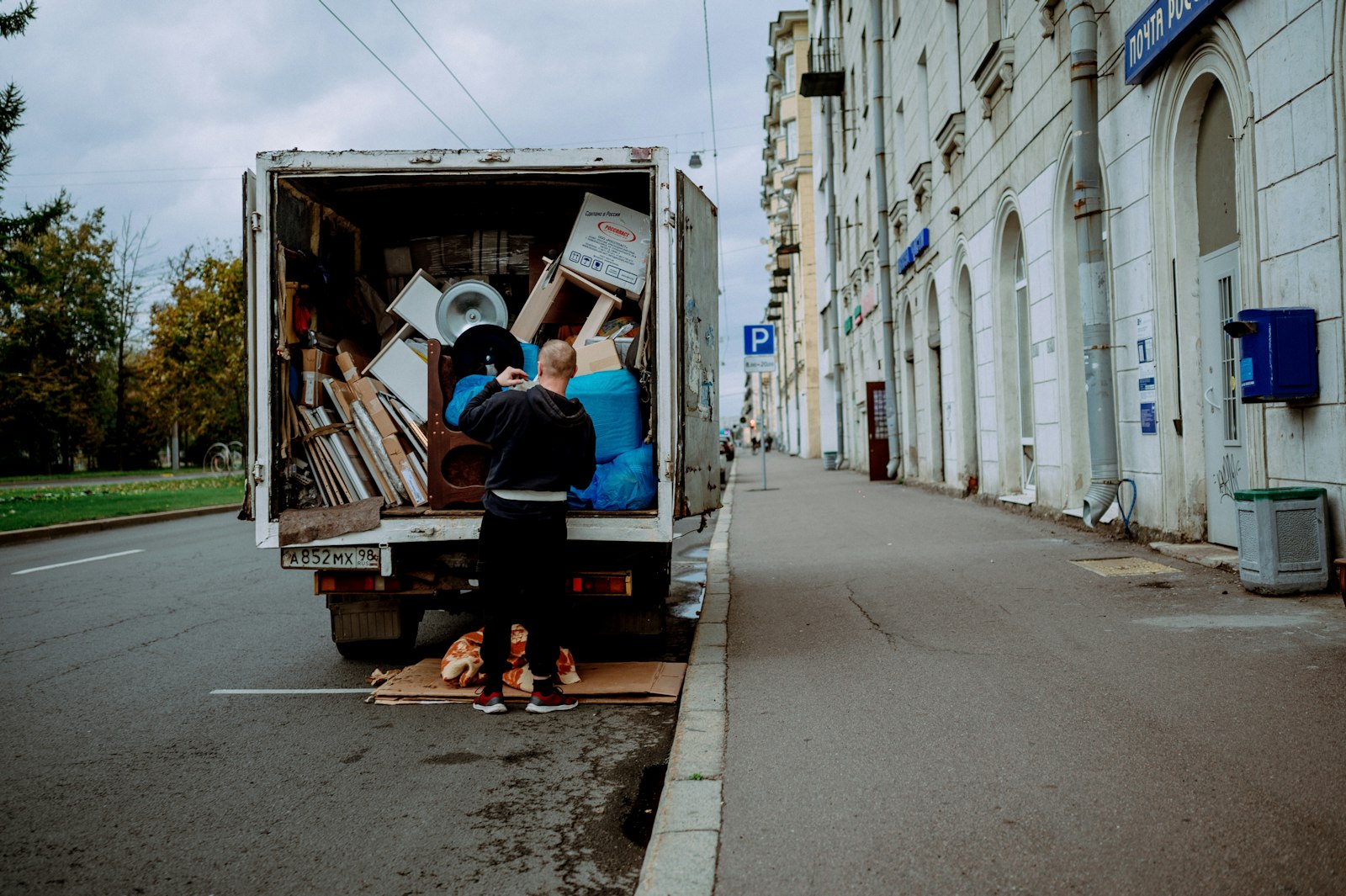
In California, a company that hauls even one couch or a gun safe across town for pay is a household mover and needs a BHGS license. For in-state jobs of five pieces or fewer going 50 miles or less, the state's Maximum Rate Tariff 4 sets per-piece ceilings, starting at $101.26 for the first piece moved up to 10 miles.
People are searching for this. Google Trends for California shows "single item movers" and "short distance movers near me" climbing over the past three months. The rules for a one-item job are the same rules that govern a full house, plus a pricing option most people never hear about.
Does a single-item move need a licensed mover?
Yes, if someone is hauling it for pay. California's Household Movers Act defines a household mover as any person or company transporting used household goods for compensation as a business, by motor vehicle, on a public road in the state. A broker who arranges that transport for pay counts as a household mover too.
The Bureau of Household Goods and Services says companies moving household goods within, into or out of California must be licensed with it. Nothing in that definition carves out small loads. A guy with a pickup and a listing that says "single item, cheap" is in the same category as a 26-foot truck.
Hiring someone just to help load a truck you rented and drive yourself is a different arrangement, since the definition turns on transporting the goods. Once a helper brings the vehicle and hauls your things for money, ask for the license number. Our guide to hiring a BHGS-licensed mover walks through the lookup.
What are California's piece rates?
Item 330 of Maximum Rate Tariff 4, effective January 1, 2026, sets maximum per-piece rates for shipments of no more than five pieces moved 50 miles or less:
- Not over 10 miles: $101.26 for the first piece
- Over 10 but not over 20 miles: $188.25 for the first piece
- Over 20 miles: $262.95 for the first piece
- Each additional piece: $34.46
A "piece" is one household article, assembled, or taken apart but secured so it can be handled as a unit. Bridge and ferry tolls can't be added on top of piece rates. They're ceilings, too. The tariff lets movers charge less.
There are limits. Piece rates don't apply if the job includes a split pickup or delivery, or storage-in-transit. They also don't apply to pianos and organs that one person can't conveniently carry. And per Item 172, distance rates (piece rates included) don't cover taking apart unusual items like pool tables, water beds or steel shelving, which is charged separately if you ask for it.
Stairs cost a little. Item 140 allows up to $6.54 per piece for each flight carry on a piece-rated job. A flight means a run of at least 8 and up to 20 steps, or an elevator ride.
How does hourly pricing compare on a small job?
Most local movers quote by the hour, and for moves of 100 miles or less that's allowed. Item 320 caps straight-time hourly rates by territory. Territory A is San Francisco and the counties of Alameda, Contra Costa, Marin, Monterey, San Mateo, Santa Clara, Santa Cruz and Sonoma. Territory B is everywhere else.
- Truck plus one person: $145.99 in Territory A, $139.36 in Territory B
- Truck plus two people: $234.39 in Territory A, $215.48 in Territory B
What really drives a small hourly bill is how the clock runs. Under Item 36, billable time is loading, plus unloading, plus double the driving time from pickup to drop-off. Times have to be recorded to the minute and rounded by a set table: up to 7 minutes is dropped, then it goes up in quarter hours. Higher overtime rates only apply when you ask for service at a time the mover has to pay its crew overtime.
Then check for minimums. The Agreement for Moving Services has to list the rates quoted, including any minimum hours. A two-hour or three-hour minimum on a 20-minute couch move can easily beat the piece rate, in the wrong direction. The tariff also says that when two or more rates are named for the same transportation, the lower one is the maximum. So ask the mover to price it both ways and show you.
What about pianos and safes?
Pianos have their own line. They're excluded from piece rates, and Item 140 sets separate flight charges: up to $39.30 for the first flight inside a building and $19.71 for each added flight, or $39.30 for the first flight outside and 90 cents per extra step.
Gun safes aren't named in the tariff, so treat one as a heavy piece and say so up front. If it needs rigging, hoisting or lowering, Item 168 says the mover charges no more than its hourly rates, or can act as your agent to hire a third party whose charges you pay. Before you book, look at what you'd collect if it's dropped; the default coverage can be tiny. See California's 60-cent valuation.
Do I still get the full paperwork for one item?
You should. A mover doesn't have to give you an estimate, but if it does, the tariff says it has to be in writing and come after a visual inspection. The Agreement must describe the services, the rates and the not-to-exceed price, signed by both of you. If the mover never issues one, or it leaves out the services or rates, charges for anything not described or quoted drop to 65 percent of the tariff maximum. If it's missing the not-to-exceed price or a signature, every charge on the job drops to the lowest of that 65 percent level, the estimate rates or the agreement rates.
The three-day notice and not-to-exceed cap still apply on a small move. See not-to-exceed pricing for local moves.
FAQ
Do single-item movers in California need a license?
Yes. A business paid to transport used household goods by vehicle in California is a household mover under the Household Movers Act, and BHGS requires a license regardless of load size.
What is the most a California mover can charge to move one item?
On a piece-rated move under Maximum Rate Tariff 4, the ceiling for the first piece is $101.26 up to 10 miles, $188.25 for 10 to 20 miles and $262.95 over 20 miles, within the 50-mile limit.
Can a mover charge a minimum number of hours?
It can, but any minimum hours have to be written into the Agreement for Moving Services along with the rates.
Do piece rates apply to a piano?
No. Pianos and organs that one person can't conveniently carry are excluded, and they have separate flight-carry charges.
Next step
Measure the item, count the stairs at both ends, and ask two licensed movers to quote it by the piece and by the hour, in writing. Then talk with a licensed local mover about which agreement fits your job before anyone loads the truck.
Sources: BHGS Maximum Rate Tariff 4, effective January 1, 2026; Cal. Bus. & Prof. Code 19225.5; BHGS, A Consumer Guide to Household Moving; Google Trends, movers, California, past 90 days.
General notes for moves in and out of California. Not a quote or a recommendation of any specific company. Confirm details with the mover you hire.
Agents who publish a lightly edited version on their own domain should set a canonical tag pointing to this URL.
List your business on the California hub, free: Movers